Why Real Places Matter (Even in Fiction)


The other night, I found myself sitting in the Depot Theatre at the Beaverhead County Museum, listening to a talk about Coolidge, Montana.
It’s the kind of place many people might pass without a second thought—just another historic mining town tucked into the landscape. But the way it was presented that night, it didn’t feel distant or forgotten. It felt specific. Grounded. Real in a way that’s hard to replicate without truly understanding it.
The speakers—a forest service archaeologist and a historian—approached Coolidge from different angles, but what stood out wasn’t just what they knew. It was how they noticed things.
Not just the broad history, but the details that reveal how people actually lived.
The narrow-gauge railroad—the last one built in the United States.Structures shaped by the land rather than forced onto it.Choices that weren’t decorative, but necessary.
None of it felt like trivia.
It felt like a place coming back into focus.
More Than a Backdrop
As a writer, I kept coming back to the same thought:
There’s a difference between using a place… and understanding it.
It’s easy to sketch in a cabin, a town, a stretch of mountains and call it a setting. But authentic settings—especially in historical fiction—carry weight.
They have logic. Limits. Patterns.
You can feel when something belongs.
And when it doesn’t.
That kind of authenticity doesn’t come from adding more description. It comes from understanding how a place actually worked—how people moved through it, depended on it, adapted to it.
The Details That Make It Real
What stayed with me wasn’t any single fact—it was the accumulation of them.
The sense that nothing existed by accident.
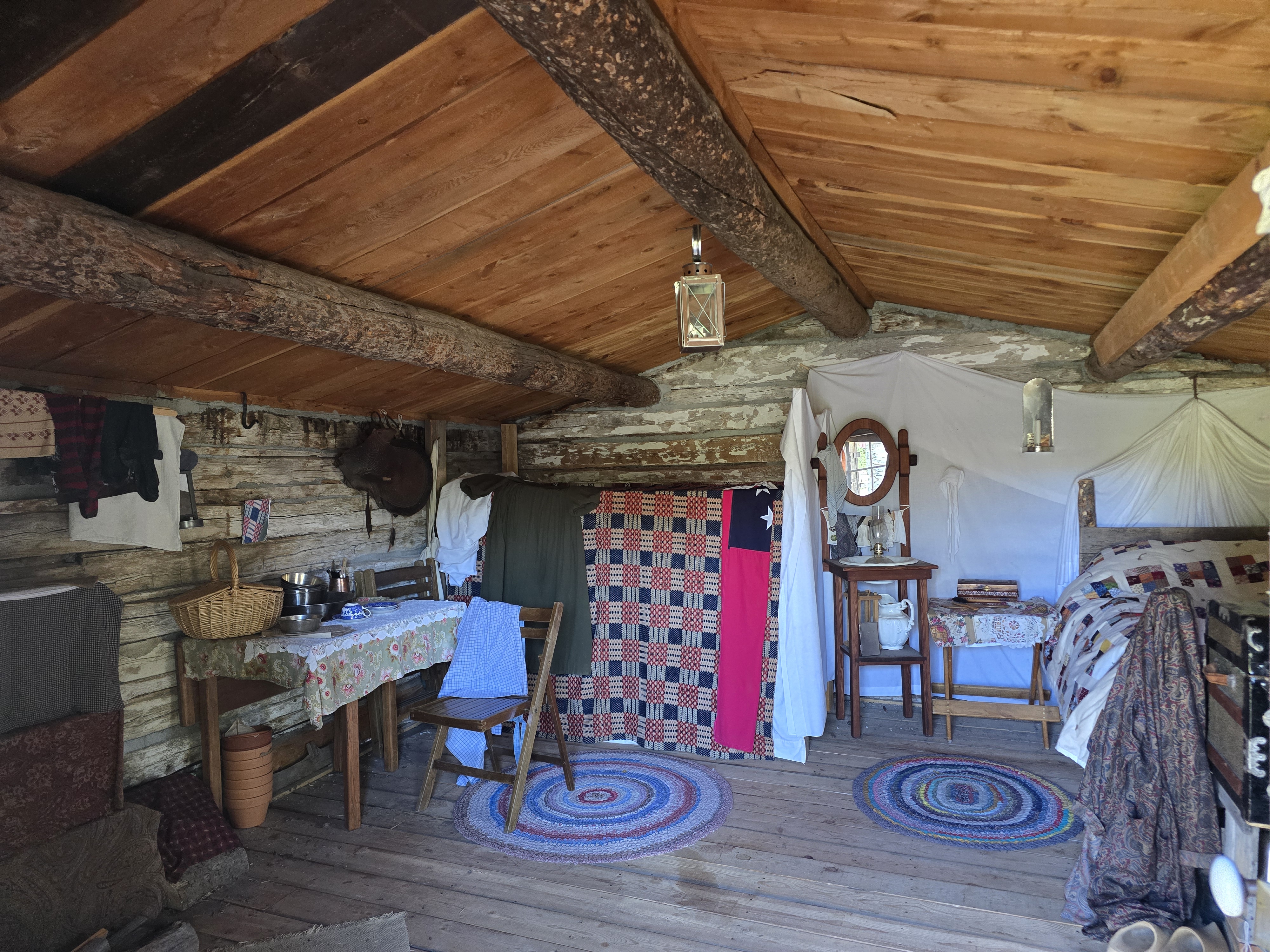
If something was built a certain way, there was a reason.If something was placed where it was, it solved a problem.If people gathered somewhere, it made sense to do so.
Those are the details that don’t call attention to themselves on the page—but they’re the ones that make a story feel believable.
Lived in.
True.
Why Showing Up Matters
There’s also something to be said for simply being in the room.
Listening to people who care deeply about a place—especially a place like Coolidge, Montana—changes how you see it. You start to notice what they notice. You begin to understand what matters.
Research becomes more than information.
It becomes perspective.
And for writers, that shift matters.
Carrying It Forward
I didn’t leave that talk thinking about how to add more into a story.
I left thinking about how to be more intentional with what’s already there.
To let places feel lived in.To trust the details that matter.To build something that feels like it could have existed—even when it didn’t.
Because place matters.
Even in fiction.
If you’re the kind of person who would have enjoyed sitting in that room as much as I did—or the kind who’d rather hike out and see a place like Coolidge for yourself—you’ll probably enjoy where The Divide is headed.
I share the earliest updates and details with my email list first—so if you want in on that, you can sign up here.

Comments